
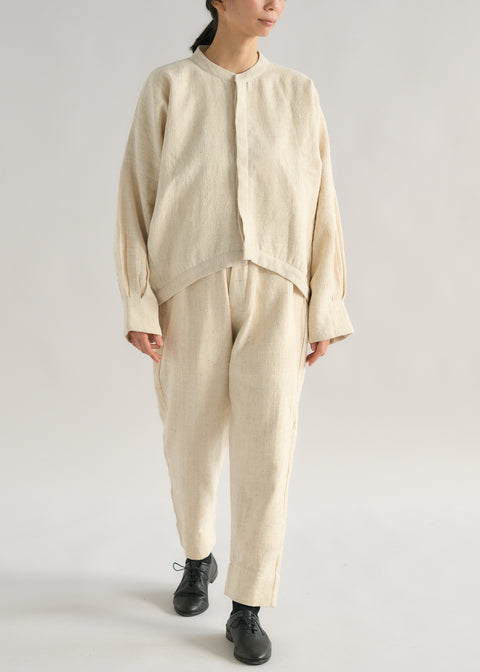
モデル身長159cm Mサイズ着用
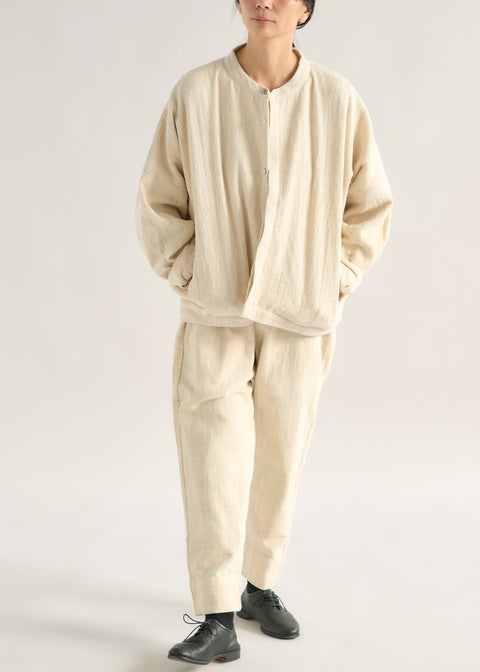
モデル身長159cm Lサイズ着用
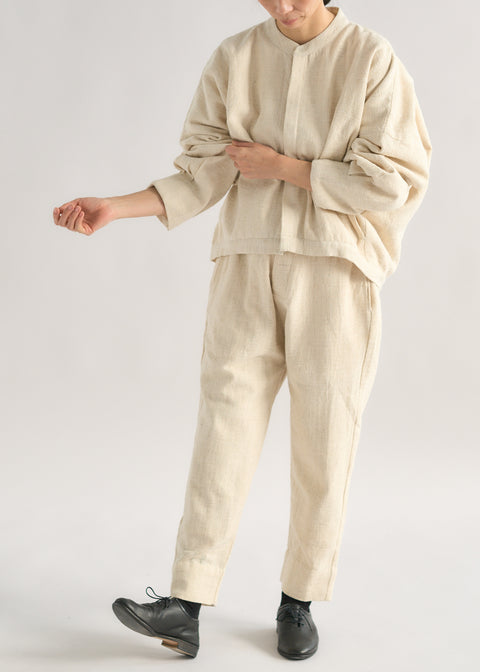
モデル身長159cm Mサイズ着用
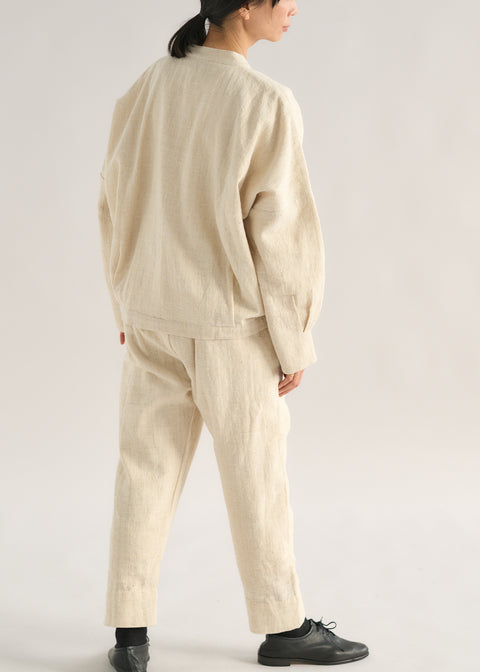
モデル身長159cm Mサイズ着用
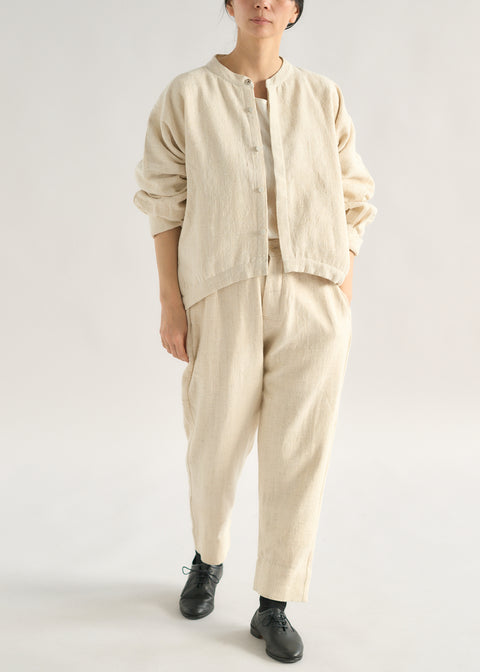
モデル身長159cm Mサイズ着用
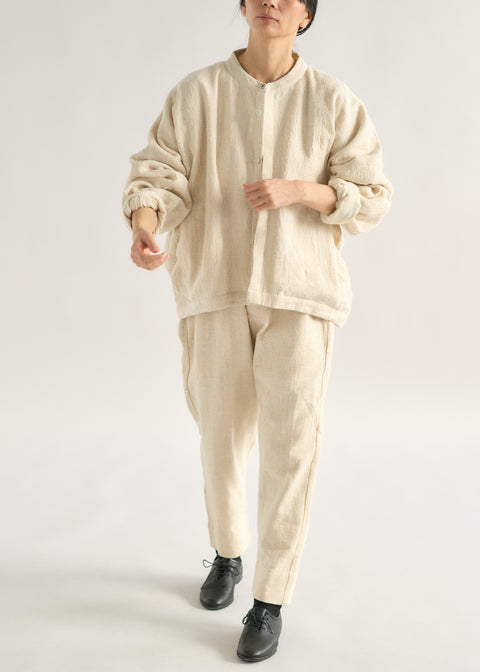
モデル身長159cm Lサイズ着用
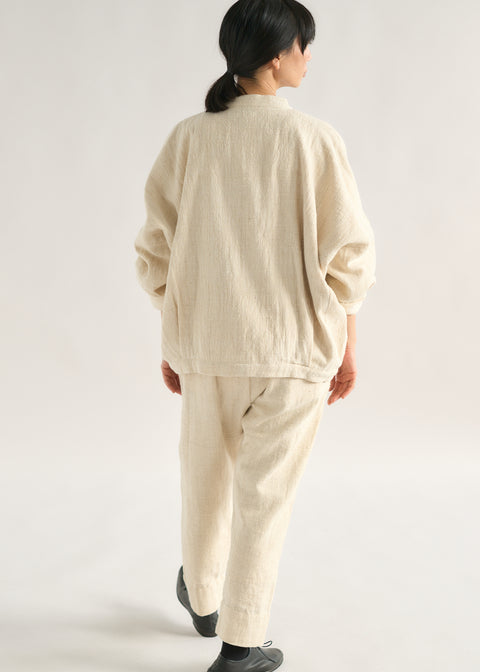
モデル身長159cm Lサイズ着用
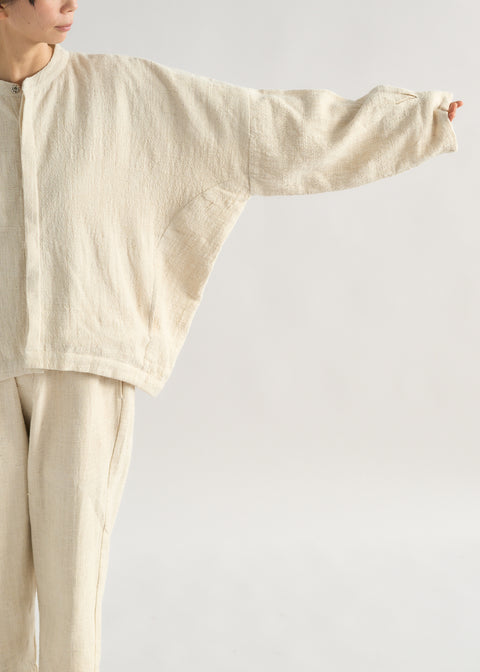
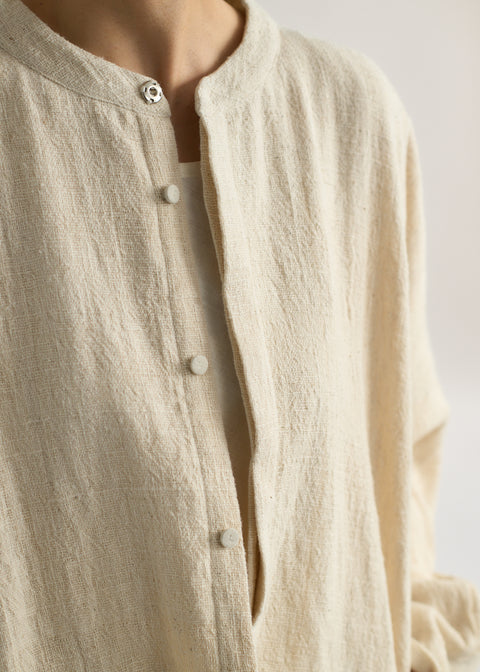
Petit Chalka Kara Cotton Short Jacket
¥41,800
Product Description
I made a jacket that looks like a blouson.
This piece features a soft, cute shape and the rough texture of the native Kara cotton.
The short length makes it well-balanced when paired with a dress or voluminous skirt, and it is also easy to wrap a scarf or shawl around your neck.
Since it is made of cotton, you can easily wear it regardless of the season.
You can also wear layers underneath during the change of seasons or the chilly early spring months.
In photos 1-5, I am wearing size M, and in photos 6-8, I am wearing size L.
Kara cotton has a unique texture with uneven shrinkage.
It feels a bit rougher to the touch than the Bengal khadi that CALICO normally handles, but this rough feel is actually refreshing and gives it the feel of cotton from ancient times.
Among them, this Petichalka Khadi is something special.
(August 2023, the name was changed from Single Charkha to Peti Charkha to suit the local language.)
Now that charkhas have been largely replaced by amvir charkhas (highly productive charkhas) across India, spinning thread using peti charkhas, which are like large portable books, is mostly only used at home or is a symbolic image of spinning thread while meditating in school.
When I heard that Khamir had also become able to make peticharkha khadi, I was skeptical, wondering who would be willing to take on such an inefficient job.
The answer lay with the Saudarajput women. They didn't originally spin peti charkhas; they were taught how to do it by an NGO more than 30 years ago. When they were young, they were passionate about embroidering things like sukh, but as they got older and embroidery became more difficult, they began to look for other crafts. This is also because Saudarajput women are traditionally not allowed to work outside the home.
The craft of Petichalka, which captivated these naturally skillful and curious women, spread from one Sodharajput village to another, and now more than 200 women are involved in the craft.
The wool of the local sheep is just as short as that of the Kara cotton, and it is not easy to spin. Among them, there are those who are good at it and those who are not, and those who are good at it will continue to hone their skills and become faster.
Although the production efficiency is only about 15% of that of Unvirtualka, women who find it interesting because it tests their skills rather than the money are enthusiastic about joining.
The fabric spun with this Petit Chalka is Kara Cotton Khadi, a fabric with a strong presence.
The thread thickness is 10 to 14 counts, which means there is a lot of variation and individual differences.
Please try out this irreplaceable texture.
Size
M: Width: approx. 84cm, Sleeve length: approx. 78cm, Length: approx. 52cm ( front ) / 60cm ( back )
L: Width: approx. 88cm, Sleeve length: approx. 82cm, Length: approx. 58cm ( front ) / 64cm ( back )
*Does not include fringe.
* Size and color may differ from actual product.
* See the size guide here .
Materials
Indigenous organic cotton
Region of production
Kutch, Gujarat
System of design
In collaboration with CALICO
Khamir
Spinning
Hand spinning with ambar charkha
Weaving
Plain weaving by hand
Dye
Undyed, natural
Before you purchase
* This product is also carried in the stores, so it may occasionally be sold out at the time of your order through the website. Unfortunately if that the product is out of stock after you placing the order, we will contact you. We appreciate your understanding.
* Hand-spun yarn is mainly made by women in the village using an efficient modern spinning wheel called an “Amber Charka.” When the yarn breaks, it is spun by hand, resulting in neps, which is a characteristic feature.
* Most of hand-spun and handwoven fabrics are produced in village huts, and as a result, threads or grass may occasionally be mixed in. Additionally, there may be uneven areas, wrinkles, or slight discoloration caused by thread breaks, as well as unavoidable minor stains. Please understand that these are characteristic features of those fabrics.
* Depending on the material, friction during use may cause pilling or fuzziness. Excessive friction or pressure can cause a fabric damage, so please avoid such a situation.
* We recommend washing at home with a neutral detergent in cold water and drying in the shade. If using a washing machine, please use a laundry net.